Rina Sato
CS2 Economy Guide | Buy, Save & Force Rounds Explained
Learn how the CS2 economy works in this complete 2026 guide. Discover when to buy, force, eco, or save to maximize your chances of winning more matches.
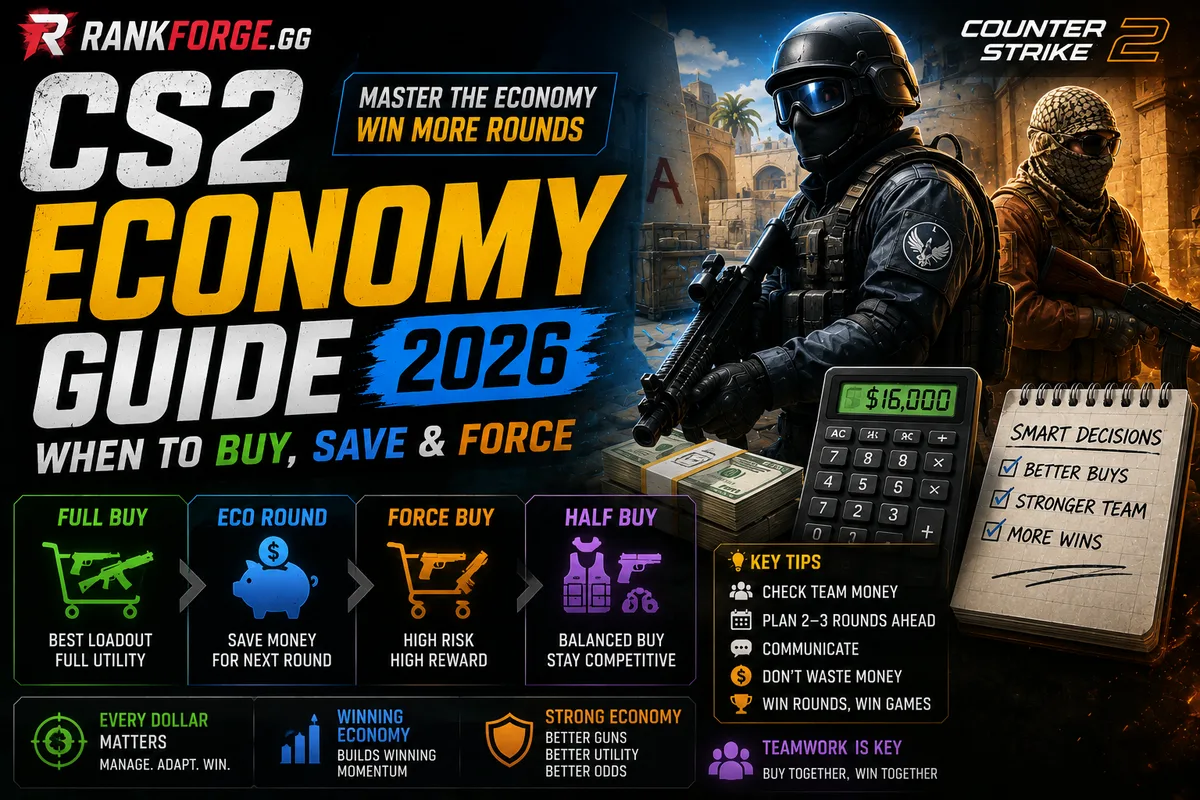
CS2 Economy Guide (2026): When to Buy, Save & Force
Winning gunfights is important, but understanding the economy is what separates average players from consistently successful teams in Counter-Strike 2.
Buying the wrong weapons at the wrong time can cost your team multiple rounds, while smart economy management gives you more opportunities to win with full utility and rifles.
This guide explains how the CS2 economy works and when you should buy, save, or force.
What Is the Economy in CS2?
Every action in Counter-Strike 2 affects your money.
You earn cash by:
- Winning rounds
- Planting the bomb
- Eliminating opponents
- Receiving loss bonuses
Managing these resources correctly is one of the biggest skills in competitive play.
Full Buy
A full buy means purchasing:
- Rifle
- Kevlar + Helmet (when needed)
- Full utility
- Defuse Kit (CT)
- AWP if your economy allows
Whenever possible, buy together with your team instead of individually.
Eco Round
An eco round means spending little or no money.
The goal is to:
- Save for the next round
- Damage the enemy economy
- Look for upgraded weapons
Avoid buying random pistols that delay your next full buy.
Force Buy
A force buy happens when your team spends most of its remaining money despite not being able to afford a full loadout.
Good force buy situations include:
- Match point
- Final round of a half
- Breaking the opponent's economy
- High-impact momentum rounds
Force buying every time usually hurts your long-term economy.
Half Buy
A half buy is a compromise.
Players purchase:
- Light armor
- Limited utility
- SMGs or upgraded pistols
This keeps enough money for a stronger buy in the following round.
Save Round
If you're unlikely to win a round, saving expensive weapons can be the smarter decision.
Keeping an AWP or rifle into the next round often provides more value than attempting a low-percentage retake.
Team Economy Matters
Always check your teammates' money before buying.
Ask yourself:
- Can everyone full buy?
- Should we save together?
- Can someone drop a rifle?
Winning as a team is more important than having the best individual weapon.
Common Economy Mistakes
Avoid:
- Buying alone when teammates are saving
- Ignoring utility
- Spending all your money every round
- Refusing to drop weapons for teammates
- Taking unnecessary risks with expensive rifles
Good economy management often wins matches before the shooting starts.
Improve Your Decision-Making
Watch professional matches and pay attention to:
- Buy calls
- Force-buy timing
- Save decisions
- Utility purchases
You'll quickly notice that elite teams think several rounds ahead.
Final Thoughts
Mastering the CS2 economy is one of the fastest ways to improve your consistency.
Winning isn't just about aim—it's about making smart financial decisions as a team.
Combine strong economy management with solid mechanics, communication, and positioning to maximize your chances of climbing the Premier ladder.
For more guides, check out How to Rank Up Fast in CS2, Best CS2 Launch Options, Best CS2 Graphics Settings, and M4A4 vs M4A1-S.
Looking to reach your target Premier Rating faster? Our professional CS2 Boosting service helps players climb safely with experienced high-ELO teammates.