Rina Sato
Valorant Rank Distribution | What Is the Average Rank?
Wondering what the average Valorant rank is? Learn how Valorant rank distribution works, what each rank means, and where you stand compared to other players.
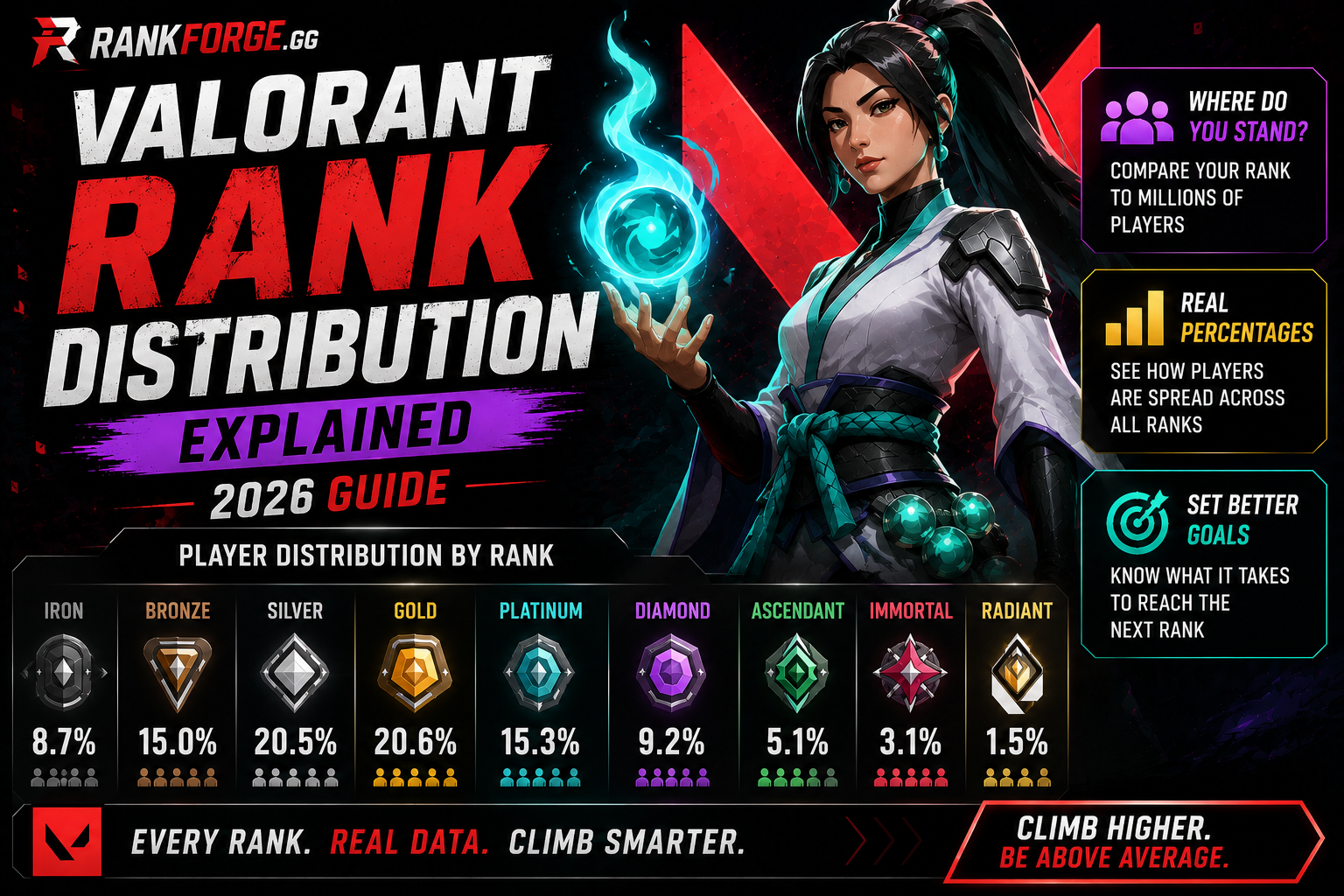
Valorant Rank Distribution Explained (2026 Guide)
Every Valorant player has wondered the same thing at some point:
"Is my rank actually good?"
You might reach Gold and still feel average.
Or hit Ascendant and wonder how many players are actually above you.
The answer lies in Valorant's rank distribution.
Understanding how the ranked ladder is divided helps you set realistic goals and appreciate your progress.
In this guide, we'll explain every Valorant rank, where the average player sits, and what each tier says about your skill level.
How Valorant's Ranked Ladder Works
Valorant's competitive mode uses nine major ranks:
- Iron
- Bronze
- Silver
- Gold
- Platinum
- Diamond
- Ascendant
- Immortal
- Radiant
Every rank except Radiant is divided into three tiers.
For example:
- Gold 1
- Gold 2
- Gold 3
Players earn RR (Rank Rating) by winning Competitive matches and lose RR after defeats.
What Is the Average Rank in Valorant?
The average Valorant player usually falls around:
- High Silver
- Low Gold
This means reaching Gold already places you above a significant portion of the player base.
Many players compare themselves to streamers or professional players, but those represent only a tiny percentage of the community.
What Makes a Good Rank?
Every rank represents improvement.
Generally speaking:
Iron & Bronze
New players learning:
- Crosshair placement
- Economy
- Basic utility
Silver & Gold
Players begin developing:
- Better aim
- Map awareness
- Communication
- Teamplay
Platinum & Diamond
Players usually demonstrate:
- Strong mechanics
- Better positioning
- Utility coordination
- Consistent decision-making
Ascendant
This is where games become noticeably more competitive.
Mistakes are punished much faster.
Communication and teamwork become essential.
Immortal & Radiant
These ranks contain some of the best players in each region.
Reaching them requires:
- Excellent mechanics
- Strong game sense
- Consistency
- High-level teamwork
Why Rank Distribution Changes
Every Episode Riot adjusts matchmaking and ranked progression.
Factors affecting distribution include:
- New Episodes
- Rank resets
- Balance updates
- New players entering Competitive
Because of this, percentages shift slightly over time.
Should You Compare Yourself to Others?
Not too much.
The most important comparison is:
You today versus you last month.
Improving your fundamentals matters far more than obsessing over rank percentages.
How to Reach Above-Average Ranks
Players who consistently climb usually focus on:
Mastering a Small Agent Pool
Specialization creates consistency.
Communication
Simple callouts win rounds.
Economy Management
Smart buying decisions create long-term advantages.
Crosshair Placement
Good positioning reduces the need for flashy flicks.
Reviewing Games
Learning from mistakes is one of the fastest ways to improve.
Common Rank Plateaus
Many players become stuck around:
- Silver
- Gold
- Platinum
This usually happens because improvement slows while opponents become stronger.
Breaking through these ranks often requires refining fundamentals rather than simply playing more matches.
Final Thoughts
Your Valorant rank is only one measure of progress.
Whether you're Bronze or Ascendant, there are always new skills to learn and improve.
Instead of comparing yourself to the very best players in the world, focus on becoming a better version of yourself every season.
If you're aiming to climb more efficiently, our professional Valorant Rank Boosting service can help you save time while reaching your desired competitive rank.
To better understand how the ranking system works, don't miss our guides on Valorant Ranked System Explained, Valorant MMR Explained, and How to Rank Up Fast in Valorant.