Rina Sato
Valorant Ranked System Explained | RR, MMR & Rank Guide
Learn how the Valorant ranked system works in 2026. Understand RR, hidden MMR, rank distribution, placements, Ascendant, Immortal, and Radiant.
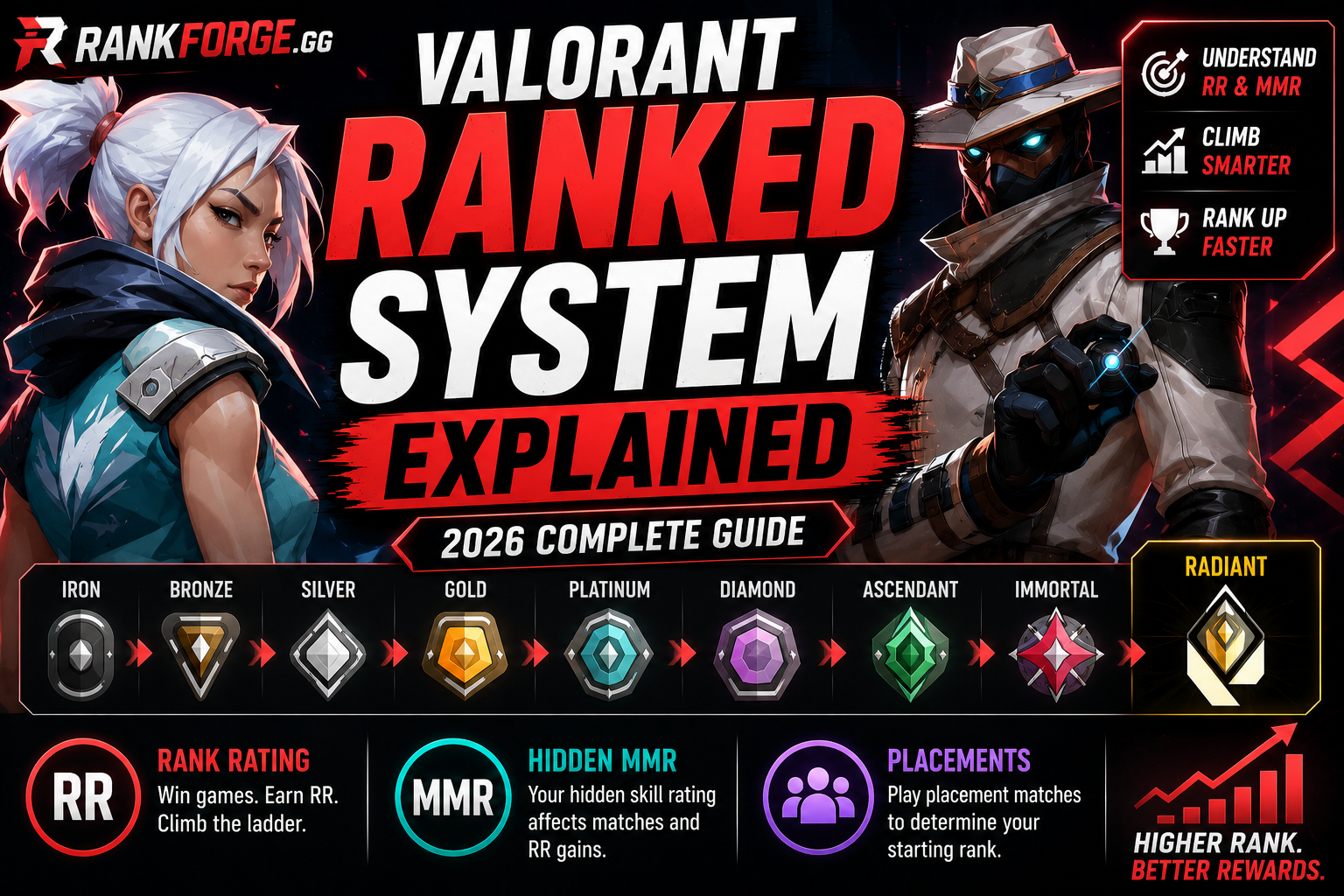
Valorant Ranked System Explained (2026 Complete Guide)
Valorant has one of the most competitive ranked systems in modern tactical shooters.
Every Act, millions of players queue for Competitive hoping to reach higher ranks, unlock rewards, and prove their skills.
Yet many players still don't understand how Riot's ranked system actually works.
Questions like:
- Why do I gain less RR than I lose?
- What is hidden MMR?
- How do placement matches work?
- Why am I playing against higher-ranked opponents?
are among the most searched Valorant questions every season.
In this guide, we'll explain everything you need to know about Valorant's ranked system and how you can use that knowledge to climb more efficiently.
What Is Valorant Competitive Mode?
Competitive Mode is Valorant's ranked playlist.
Unlike Unrated games, every Competitive match affects your rank and hidden matchmaking rating.
Winning games earns Ranked Rating (RR), while losing games reduces it.
Over time, Riot's matchmaking system attempts to place every player into the rank that best reflects their skill level.
All Valorant Ranks Explained
Valorant currently features the following competitive ranks:
- Iron
- Bronze
- Silver
- Gold
- Platinum
- Diamond
- Ascendant
- Immortal
- Radiant
Most ranks contain three divisions.
For example:
- Gold 1
- Gold 2
- Gold 3
After reaching 100 RR, players promote into the next division.
Radiant is unique because only the highest-rated players in each region can earn this rank.
What Is RR?
RR stands for Rank Rating.
Think of RR as the visible progress bar toward your next rank.
Winning games increases RR.
Losing games decreases RR.
Example:
Gold 2
- 24 RR
- Win
- +22 RR
- New total: 46 RR
Reach 100 RR and you'll promote to the next division.
What Is Hidden MMR?
Although players only see RR, Riot also tracks a hidden Matchmaking Rating (MMR).
MMR estimates your actual skill level.
It influences:
- Matchmaking
- RR gains
- RR losses
- Rank progression
Your visible rank and hidden MMR don't always match.
When your MMR is higher than your rank, Riot usually rewards you with larger RR gains.
If your MMR falls below your visible rank, climbing becomes slower.
Why Do RR Gains Change?
Many players notice that RR gains aren't always consistent.
For example:
Player A
- Win: +28 RR
- Loss: -16 RR
Player B
- Win: +18 RR
- Loss: -25 RR
The biggest reason is hidden MMR.
If Riot believes you belong in a higher rank, you'll gain RR more quickly.
If Riot believes you're currently ranked too high, your RR gains become smaller.
How Placement Matches Work
At the beginning of a new Episode or after long breaks, players complete placement matches.
These games help Riot determine your starting rank.
Placement matches consider:
- Previous MMR
- Previous rank
- Match performance
- Wins and losses
Strong performances generally lead to better placements, but your previous competitive history still matters.
How Rank Resets Work
Valorant does not completely reset every account.
Instead, Riot performs soft resets between Episodes.
This allows players to climb again while keeping matchmaking balanced.
If you finished Diamond last season, you won't suddenly start in Iron.
Your previous performance continues to influence your matchmaking.
What Makes Ascendant Different?
Ascendant was introduced to better separate high-skilled players.
It sits between:
- Diamond
- Immortal
Many players consider Ascendant one of the most competitive ranks because mistakes become much more costly.
Communication, teamwork, and consistency become increasingly important.
Immortal and Radiant
Immortal removes traditional divisions and introduces regional leaderboards.
Radiant represents the highest competitive rank in Valorant.
Only a limited number of players in each region can earn Radiant at any given time.
Reaching Radiant requires:
- Exceptional aim
- Excellent communication
- Consistent teamwork
- High win rates
Common Ranked Mistakes
Many players struggle because they focus on the wrong things.
Common mistakes include:
- Playing too many agents
- Ignoring team communication
- Poor economy management
- Taking unnecessary duels
- Blaming teammates instead of improving
Fixing these habits often produces faster improvement than simply playing more games.
How to Rank Up Faster
Climbing in Valorant is about consistency.
The most successful players usually:
Master a Small Agent Pool
Play two or three agents instead of constantly switching.
Improve Communication
Clear, concise callouts help your entire team.
Learn Economy Management
Understanding when to buy, save, or force can decide close matches.
Practice Your Aim
Regular aim training improves confidence and consistency.
Review Your Games
Watching your own gameplay helps identify mistakes you don't notice during a match.
Final Thoughts
Valorant's ranked system is designed to reward long-term improvement rather than short winning streaks.
Understanding RR, hidden MMR, placements, and rank resets allows you to make better decisions throughout your climb.
Instead of worrying about every individual match, focus on improving your fundamentals and maintaining consistency.
If you're aiming to reach a higher rank but don't have time for the grind, check out our professional Valorant Rank Boosting service. Whether you're climbing from Gold to Platinum or pushing toward Immortal, our experienced players can help you achieve your ranked goals safely and efficiently.